Wednesday, December 3, 2008

The Comeback Dog


Do you still have some of your old Weekly Reader Book Club titles? I do, and wish I had kept them all. How many tens of millions of kids do you suppose have fed their growing appetite for reading with these prolific, durable books? With some happy exceptions, most are not great literature, but many are still good stories, and they are widely available at thrift stores.

Jane Resh Thomas's The Comeback Dog is a good case in point: a short, very serviceable boy and dog story, published in 1981. Virtues of thrift, responsibility and quality workmanship are affirmed without preaching. And where else these days is a kid going to hear the phrase "going like sixty!"?

Friday, November 28, 2008

The Afternoon Treehouse


This is, very simply, a fabulous picture book. Multiple award-winning illustrator Robert Ingpen has given us a beautiful, detailed look at a mysterious treehouse. (And left the door open for a sequel?) This "Notable Australian Children's Book" is a treat for guys (and girls?) of all ages, and has earned a spot on our "100 Best Picture Books of all Time" list. Lothian Books, 1996.

Sunday, November 23, 2008

Bored-Nothing To Do!


One of Peter Spier's fifty picture books, this is a rollicking ride through a "boring" day in the life of two brothers. The fact that none of the characters are named is a plus, as every parent and child will see themselves in the story. Known for wordless books--his Noah's Ark deservedly won the Caldecott Medal thirty years ago--this book would probably have been stronger without the spare, sometimes awkward text. The title alone is enough words, and the message is priceless.

No child should miss Peter Spier.

Sunday, October 5, 2008

The Reluctant Dragon


"Rules always come right if you wait quietly."

25 years ago Michael Hague illustrated Kenneth Grahame's (The Wind in the Willows) The Reluctant Dragon. Even Middle School kids enjoy this fable if you read it well.

Wednesday, October 1, 2008

Family valued

"In an age in which one can be sure of only one thing-change-the family circle gives the child an anchor of stability and security in the midst of spatial geographic bounds, technological innovations, and social upheavals. It is important that some children's literature emphasize family unity since a child usually is neither consciously aware of, nor appreciative of, the feeling of togetherness in his own family. If the young reader unfortunately is not a member of a closeknit family in his own environment, it might motivate him to value and desire strong family interrelationship when he, in his turn, is an adult and has children of his own."
Julie Carson, writing about her mother's books for children in 1968. Quoted in Hoffman, Authors and Illustrators of Children's Books.

What about you? Did hearing or reading children's books that featured strong family relationships help you to value them in your own life?

Sunday, September 21, 2008

Election year reality checks: #2


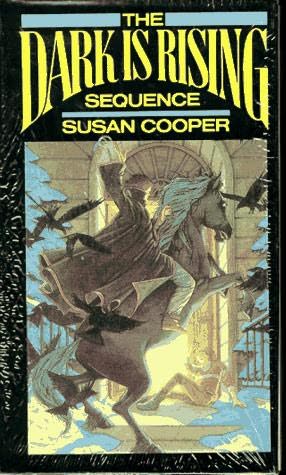
"Any great gift or talent or power is a burden...and you will often long to be free of it. But there is nothing to be done. If you were born with the gift, then you must serve it, and nothing in this world or out of it may stand in the way of that service, because that is why you were born and that is the Law."
Susan Cooper: The Dark is Rising, p.43

Tuesday, July 1, 2008

Mr. Gumpy's Outing


John Burningham's 1970 award-winning story begins--"This is Mr. Gumpy." (Note: NOT Grumpy)
A Kirkus reviewer said it well: "Mr. Gumpy's little scow becomes a miniature ark when he takes two children and one each of various domestic animals for a ride... The water appears so warmly inviting, and the tea they all share so satisfying, that the promise of the first glowing page is fulfilled. Burningham's sketchy yellow lines make the sun shine on his pages, and his animals--sometimes jaunty, more often appealingly hesitant--are his alone, unostentatiously distinctive. Mr. Gumpy has a bumbling charm, and his outing is an unqualified pleasure."

Monday, June 30, 2008

Non-fiction comes of age: the Orbus Pictus & Sibert Awards


Frequently referred to by the unfortunately drab title of "Information Books", accurate, well-written, engaging non-fiction for children has been one of the last major genres to show up at the dance. But thanks to Jean Fritz, Russell Freedman, Milton Meltzer, James Cross Giblin, Jim Murphy, and others, that has all changed.
It's hard to say how much impact the increased recognition (and resulting sales?) of non-fiction awards has had on attracting good writers to this form, but information books no longer have to just compete with fiction for the Newbery and Caldecott Medals (the big two in children's book awards in the U.S.) There are now two major non-fiction awards annually, and many lesser ones.
In the days and months ahead, we will feature a few of these award-winners; they deserve to be widely read and enjoyed.

Wednesday, June 25, 2008

Jan Brett missed the boat on this one!


Don't get me wrong--I like Jan Brett's illustration work a lot; we've included her Ukranian folktale, The Mitten, on our list of 100 Best Picture Books of All Time. But her On Noah's Ark is a big disappointment. How can you tell this great story without so much as mentioning the hero? The hero, as throughout the Old Testament, is God.
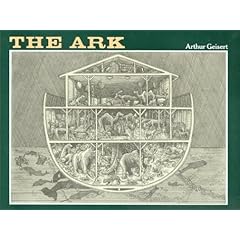
Three other "Noah's" are much truer to the original story/events, and are top-notch picture books as well: Arthur Geisert's Ark is rich in suggestive detail; even better is Peter Spier's Noah's Ark, a wordless 1978 Caldecott Medal winner. From cover to cover, this is a fine work.
And then there is Noah and the Rainbow by Max Bollinger, artfully handled by Aichinger. Both of these last two books include the element of judgement in very useful ways;
Good picture books can help us teach our children a healthy fear of God.

Wednesday, June 18, 2008

The Bee Tree


Maintaining her characteristically high standard of storytelling and artistry, Patricia Polacco has her own read on the words of the Psalmist- "The law of the Lord...is sweeter than honey, than honey from the comb." In her case, she "celebrates the unexpected joys-and adventure-of reading itself!"
And, I might add, of community.
Do you think this method of tracking down a honey tree has actually been used successfully?