Monday, June 30, 2008

Non-fiction comes of age: the Orbus Pictus & Sibert Awards


Frequently referred to by the unfortunately drab title of "Information Books", accurate, well-written, engaging non-fiction for children has been one of the last major genres to show up at the dance. But thanks to Jean Fritz, Russell Freedman, Milton Meltzer, James Cross Giblin, Jim Murphy, and others, that has all changed.
It's hard to say how much impact the increased recognition (and resulting sales?) of non-fiction awards has had on attracting good writers to this form, but information books no longer have to just compete with fiction for the Newbery and Caldecott Medals (the big two in children's book awards in the U.S.) There are now two major non-fiction awards annually, and many lesser ones.
In the days and months ahead, we will feature a few of these award-winners; they deserve to be widely read and enjoyed.

Wednesday, June 25, 2008

Jan Brett missed the boat on this one!


Don't get me wrong--I like Jan Brett's illustration work a lot; we've included her Ukranian folktale, The Mitten, on our list of 100 Best Picture Books of All Time. But her On Noah's Ark is a big disappointment. How can you tell this great story without so much as mentioning the hero? The hero, as throughout the Old Testament, is God.
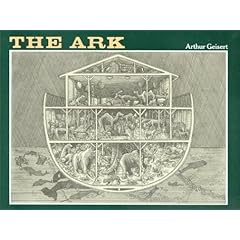
Three other "Noah's" are much truer to the original story/events, and are top-notch picture books as well: Arthur Geisert's Ark is rich in suggestive detail; even better is Peter Spier's Noah's Ark, a wordless 1978 Caldecott Medal winner. From cover to cover, this is a fine work.
And then there is Noah and the Rainbow by Max Bollinger, artfully handled by Aichinger. Both of these last two books include the element of judgement in very useful ways;
Good picture books can help us teach our children a healthy fear of God.

Wednesday, June 18, 2008

The Bee Tree


Maintaining her characteristically high standard of storytelling and artistry, Patricia Polacco has her own read on the words of the Psalmist- "The law of the Lord...is sweeter than honey, than honey from the comb." In her case, she "celebrates the unexpected joys-and adventure-of reading itself!"
And, I might add, of community.
Do you think this method of tracking down a honey tree has actually been used successfully?

Sunday, June 15, 2008

Ernst Kreidolf (1863-1956)


"What is there that children cannot imagine! They personify everything. If they have not got a doll, then a chunk of wood will do. It is therefore quite natural for flowers to have faces-and especially when nature comes to their assistance, as it does with the pansy."
Ernst Kreidolf, (autobiography) Quoted in Bettina Hurlimann, Three Centuries of Children's Books in Europe.
If you would like to see Kreidolf's pansy-children, I recently found a copy of Servants of the Spring, one of the first translations into English.

Sunday, June 8, 2008

Anno's Magic Seeds


If you have ever wished that math could be interesting or even fun, MEET MR. ANNO! This Japanese artist/mathematician is a treasure. For older students, Anno's Mysterious Multiplying Jar is a great way to introduce "factorials". Anno and his co-author son, Masaichiro, say, "Learning about numbers and how they can expand almost without limit by such simple means as are shown in this book will, we hope, give readers an idea of the remarkable order that underlies our universe, and a sense of the mystery, wonder, and excitement that can be experienced through mathematics."
That's my kind of math, and my kind of magic!
PS: Don't worry if the computations in either of these books is over your children's heads; mystery and wonder don't require mastery of facts or techniques.

Wednesday, June 4, 2008

And now a word from Aslan


A monstrously important reminder in an election year:
"Welcome, Prince Caspian," said Aslan. "Do you feel yourself sufficient to take up the Kingship of Narnia?"
"I--I don't think I do, Sir," said Caspian. "I'm only a kid."
"Good," said Aslan. "If you had felt yourself sufficient, it would have been a proof that you were not."
C. S. Lewis, Prince Caspian. p200