Wednesday, December 3, 2008

The Comeback Dog


Do you still have some of your old Weekly Reader Book Club titles? I do, and wish I had kept them all. How many tens of millions of kids do you suppose have fed their growing appetite for reading with these prolific, durable books? With some happy exceptions, most are not great literature, but many are still good stories, and they are widely available at thrift stores.

Jane Resh Thomas's The Comeback Dog is a good case in point: a short, very serviceable boy and dog story, published in 1981. Virtues of thrift, responsibility and quality workmanship are affirmed without preaching. And where else these days is a kid going to hear the phrase "going like sixty!"?

Friday, November 28, 2008

The Afternoon Treehouse


This is, very simply, a fabulous picture book. Multiple award-winning illustrator Robert Ingpen has given us a beautiful, detailed look at a mysterious treehouse. (And left the door open for a sequel?) This "Notable Australian Children's Book" is a treat for guys (and girls?) of all ages, and has earned a spot on our "100 Best Picture Books of all Time" list. Lothian Books, 1996.

Sunday, November 23, 2008

Bored-Nothing To Do!


One of Peter Spier's fifty picture books, this is a rollicking ride through a "boring" day in the life of two brothers. The fact that none of the characters are named is a plus, as every parent and child will see themselves in the story. Known for wordless books--his Noah's Ark deservedly won the Caldecott Medal thirty years ago--this book would probably have been stronger without the spare, sometimes awkward text. The title alone is enough words, and the message is priceless.

No child should miss Peter Spier.

Sunday, October 5, 2008

The Reluctant Dragon


"Rules always come right if you wait quietly."

25 years ago Michael Hague illustrated Kenneth Grahame's (The Wind in the Willows) The Reluctant Dragon. Even Middle School kids enjoy this fable if you read it well.

Wednesday, October 1, 2008

Family valued

"In an age in which one can be sure of only one thing-change-the family circle gives the child an anchor of stability and security in the midst of spatial geographic bounds, technological innovations, and social upheavals. It is important that some children's literature emphasize family unity since a child usually is neither consciously aware of, nor appreciative of, the feeling of togetherness in his own family. If the young reader unfortunately is not a member of a closeknit family in his own environment, it might motivate him to value and desire strong family interrelationship when he, in his turn, is an adult and has children of his own."
Julie Carson, writing about her mother's books for children in 1968. Quoted in Hoffman, Authors and Illustrators of Children's Books.

What about you? Did hearing or reading children's books that featured strong family relationships help you to value them in your own life?

Sunday, September 21, 2008

Election year reality checks: #2


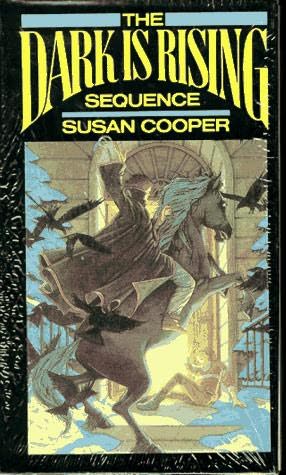
"Any great gift or talent or power is a burden...and you will often long to be free of it. But there is nothing to be done. If you were born with the gift, then you must serve it, and nothing in this world or out of it may stand in the way of that service, because that is why you were born and that is the Law."
Susan Cooper: The Dark is Rising, p.43

Tuesday, July 1, 2008

Mr. Gumpy's Outing


John Burningham's 1970 award-winning story begins--"This is Mr. Gumpy." (Note: NOT Grumpy)
A Kirkus reviewer said it well: "Mr. Gumpy's little scow becomes a miniature ark when he takes two children and one each of various domestic animals for a ride... The water appears so warmly inviting, and the tea they all share so satisfying, that the promise of the first glowing page is fulfilled. Burningham's sketchy yellow lines make the sun shine on his pages, and his animals--sometimes jaunty, more often appealingly hesitant--are his alone, unostentatiously distinctive. Mr. Gumpy has a bumbling charm, and his outing is an unqualified pleasure."

Monday, June 30, 2008

Non-fiction comes of age: the Orbus Pictus & Sibert Awards


Frequently referred to by the unfortunately drab title of "Information Books", accurate, well-written, engaging non-fiction for children has been one of the last major genres to show up at the dance. But thanks to Jean Fritz, Russell Freedman, Milton Meltzer, James Cross Giblin, Jim Murphy, and others, that has all changed.
It's hard to say how much impact the increased recognition (and resulting sales?) of non-fiction awards has had on attracting good writers to this form, but information books no longer have to just compete with fiction for the Newbery and Caldecott Medals (the big two in children's book awards in the U.S.) There are now two major non-fiction awards annually, and many lesser ones.
In the days and months ahead, we will feature a few of these award-winners; they deserve to be widely read and enjoyed.

Wednesday, June 25, 2008

Jan Brett missed the boat on this one!


Don't get me wrong--I like Jan Brett's illustration work a lot; we've included her Ukranian folktale, The Mitten, on our list of 100 Best Picture Books of All Time. But her On Noah's Ark is a big disappointment. How can you tell this great story without so much as mentioning the hero? The hero, as throughout the Old Testament, is God.
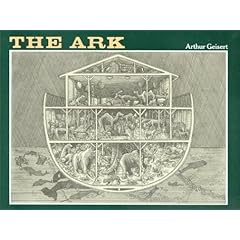
Three other "Noah's" are much truer to the original story/events, and are top-notch picture books as well: Arthur Geisert's Ark is rich in suggestive detail; even better is Peter Spier's Noah's Ark, a wordless 1978 Caldecott Medal winner. From cover to cover, this is a fine work.
And then there is Noah and the Rainbow by Max Bollinger, artfully handled by Aichinger. Both of these last two books include the element of judgement in very useful ways;
Good picture books can help us teach our children a healthy fear of God.

Wednesday, June 18, 2008

The Bee Tree


Maintaining her characteristically high standard of storytelling and artistry, Patricia Polacco has her own read on the words of the Psalmist- "The law of the Lord...is sweeter than honey, than honey from the comb." In her case, she "celebrates the unexpected joys-and adventure-of reading itself!"
And, I might add, of community.
Do you think this method of tracking down a honey tree has actually been used successfully?

Sunday, June 15, 2008

Ernst Kreidolf (1863-1956)


"What is there that children cannot imagine! They personify everything. If they have not got a doll, then a chunk of wood will do. It is therefore quite natural for flowers to have faces-and especially when nature comes to their assistance, as it does with the pansy."
Ernst Kreidolf, (autobiography) Quoted in Bettina Hurlimann, Three Centuries of Children's Books in Europe.
If you would like to see Kreidolf's pansy-children, I recently found a copy of Servants of the Spring, one of the first translations into English.

Sunday, June 8, 2008

Anno's Magic Seeds


If you have ever wished that math could be interesting or even fun, MEET MR. ANNO! This Japanese artist/mathematician is a treasure. For older students, Anno's Mysterious Multiplying Jar is a great way to introduce "factorials". Anno and his co-author son, Masaichiro, say, "Learning about numbers and how they can expand almost without limit by such simple means as are shown in this book will, we hope, give readers an idea of the remarkable order that underlies our universe, and a sense of the mystery, wonder, and excitement that can be experienced through mathematics."
That's my kind of math, and my kind of magic!
PS: Don't worry if the computations in either of these books is over your children's heads; mystery and wonder don't require mastery of facts or techniques.

Wednesday, June 4, 2008

And now a word from Aslan


A monstrously important reminder in an election year:
"Welcome, Prince Caspian," said Aslan. "Do you feel yourself sufficient to take up the Kingship of Narnia?"
"I--I don't think I do, Sir," said Caspian. "I'm only a kid."
"Good," said Aslan. "If you had felt yourself sufficient, it would have been a proof that you were not."
C. S. Lewis, Prince Caspian. p200

Wednesday, May 28, 2008

Cloudy With a Chance of Meatballs


All across the country, this entire year, the weather has been unpredictable and difficult. But at least we haven't had to deal with storms of hamburgers, pea soup fog, and tomato tornados, like the folks in the little town of Chewandswallow. Thirty years ago, Ron Barrett's goofy illustrations lit up Judi Barrett's story of a place where "Everything that everyone ate came from the sky."

I have it on good report that four year old boys consider this book "hilarious".

Wednesday, May 21, 2008

SAQ #3 Where are the "deals" on used kid's books?

From cheapest to not so cheap:

1. Garage sales. (But who has time to wander around burning up gas?)
2. Public library periodic sales. (Semi-annually or monthly at most libraries)
3. Thrift stores. (Independent, like Treasures Two in Shelton WA)
4. Goodwill.
5. Discount retailers. (Like Half Price Books; they usually keep a close-out cart just for kid's books)
6. Used book stores.

We'll focus on Internet sources in another post.

Where have you found good deals on kid's books?

Queen of Hearts

I wish I could have sat and had a cup of coffee with Vera Cleaver. (She died in 1992.) I'd like to see how a woman who so obviously loved WORDS used them in conversation. She seems to me to be an example of the "greatest strength is also greatest weakness" principle; a stunningly crafted phrase will be followed a few lines later with a sentence so awkward that you have to read it twice. But the payoff is more than worth the effort.
Cleaver and her husband Bill are best known for the multiple award-winning Where the Lilies Bloom (1969).
Queen of Hearts finds "twelve-year-old Wilma being chosen as her willful and peppery grandmother's choice for a (live-in) companion." I won't forget Wilma Omalie Lincoln and what she learned about getting old and about growing up.
We all need to bury our plastic six-shooters at some point.
Quality = 4 out of 5; Acceptability = 4 out of 5.

Wednesday, May 14, 2008

Chronicles of Narnia "reloaded"


"The Narnia Chronicles are worth reading over and over by every child and in every family. They are profoundly good books on every level--theme, plot, characters, action, language."
Gladys Hunt, Honey for a Child's Heart. p. 31

Do you agree?

Friday, May 9, 2008

Series Books....Part 2


"Series books" have been controversial from the beginning. But before going on, we need to clarify what we mean by the term. Anita Silvey offers a helpful distinction--"Perhaps the books should be termed "formula series" to distinguish them from literary works that also follow a continuing character through several volumes. Laura Ingalls Wilder's Little House series and Beverly Cleary's Ramona books have three-dimensional characterizations, thought-provoking themes, and high-quality writing that sets them far above the series label. [This kind of] literary series is guided by an artistic vision, while the formula series seems to be driven by commercial considerations. Quantity, rather than quality, is the key for most formula series." Anita Silvey, The Essential Guide to Children's Books and their Creators. p. 407
To the worthy "literary" series list, we would add Lewis's Chronicles of Narnia, Tolkien's Lord of the Rings, and Susan Cooper's The Dark is Rising (all fantasy).
What series would you add to this list?

Thursday, May 8, 2008

What about "series books"? Part 1

A lot of readers don't know that many, if not most, series have been written by a stable of hack writers who crank out the formulas handed to them. (Hardy Boys, Nancy Drew, and others). This hundred year old pattern raises a number of issues.
"Creative writing of any kind must come naturally from well-springs within the author and it is improbable that any deliberately created collection of stories, uniform in length and treatment, but by a variety of authors, will produce writing of the first class. It may, and often does, produce adequate writing, in a recognizable set of books on which parents and other present-givers can rely if they are incapable of selecting for themselves, or unwilling to make the effort. But it rarely produces the best..." Frank Eyre, British Children's Books in the Twentieth Century, p. 73.

Wednesday, May 7, 2008

Amos & Boris & .....Scot


Amos is William Steig's mouse who loves to sail; Boris is a whale with a great sense of timing; and Scot, well, Scot is our Second Grade teacher. He decided to read this "faintly Aesopian tale" (who writes these reviews?) right up to the resolution, and then have his students write their own conclusions (before they heard Steig's). How about this for a seven year old--
"Amos thot and thot. then a ideaya came to him so he walked down the roed. he whent to a man's hous. when the man soa him he chased him down to wher Borus wus. the man got the hole town to the Beach. And thay helped Borus into the water. The man looked at Amos. "you did a good dead today my little frend. then Amus whent happly home and so did Borus the end."
The New York Times Book Review described this multiple award-winning story as "pellucid and profound." Pellucid? An unclear word that means "clear in meaning or expression". I prefer "full of wonder, full of enterprise, and full of love for life."
As Boris would say, "Holy clams and cuttlefish!"

Tuesday, May 6, 2008

Park's Quest


March 27, 2008-My first visit to the Washington, D. C. area includes an early morning stop at the Vietnam Memorial. As a (non-combat) Vietnam era vet, I was a little unsure of how it would go for me.
April 15, 2008- Reading Katherine Paterson's Park's Quest helps me humanize the shiny marble endless list of names; remember the men I knew who didn't return; and empathize again with my friends who came back alive, but have never been the same.
Although written at a sixth grade vocabulary level, this is definitely Young Adult material, with a few crude phrases and themes not for the under 15 crowd.
Gary Schmidt thinks Paterson (Bridge to Terebithia, etc.) is the most important writer for young people in the 20th century. What do you think?

Monday, May 5, 2008

Rembrandt's Hat


When you read this story aloud (and please do), be sure to give the little bear a low-key Eyore sound. This is a fairly recent picture book that will probably be around for a long time. Our sixth graders enjoy it as much as our six year olds. Rembrandt loses his hat, which results in "a frustrating predicament, especially as a bossy bird, a bored cat, and an outspoken rabbit decide to help."
I don't know who first thought of cataloging Picture Books as "E" for Everybody; Rembrandt's Hat is one of those precious few that is.

Thursday, May 1, 2008

The Silver Swan


What do you get when an acclaimed British writer of Young Adult novels, namely Michael Morpurgo, teams up with a talented illustrator to produce a Picture Book, namely The Silver Swan? You get an intelligent, sensitive story of life and death in the natural world that will even hold the attention of a class of sixth-graders. Christian Birmingham's moody paintings contribute to the text.
We parents and teachers are missing a good thing in not reading more Picture Books with our older children. The Silver Swan proves why.

Thursday, April 24, 2008

Beware the sausage vendors


"How sad it is that writers whose books are, on the whole, worthless, produce them like sausages out of a machine, whereas the real artists among children's writers (with few exceptions) write so few."
Frank Eyre, British Children's Books in the Twentieth Century, p.150. 1971
Want to take a run at naming today's "sausage vendors"?
Or, perhaps more usefully, who do you consider to be "real artists among children's writers" today?

Lizzie Bright and the Buckminster Boy


Three months ago, Gary D. Schmidt learned that his latest youth novel, The Wednesday Wars, had won a coveted Newbery Honor. This is the Calvin College Professor of English's second such award. He previously won it for Lizzie Bright, a finely crafted and beautifully phrased story of friendship and courage drawn against racial bigotry. Sprinkled profanity and a brave, but ultimately unsatisfying attempt to be fully human from an evolutionary worldview make this work not appropriate for our younger students. But, I ask you, where else is a kid going to learn the adjective "hugger-mugger"? (Yes, it is in the dictionary.) Quality = 5; Acceptability = varies with age of reader.

Saturday, April 19, 2008

SAQ #1: What are SAQs?

SAQs are "Seldom asked questions."
Francis Schaeffer used to say something along the lines of, having correct and useful answers is to no avail if people aren't asking the right questions. So, from time to time I will answer a question that no one has asked.
Thanks for asking.

Friday, April 18, 2008

What is it about Alphabet books?


Other than fables, legends and fairy tales, no genre or type of kid's books has been more enduring or perennially popular than Alphabet Books. There are thousands; did you know? You are probably familiar with several--perhaps Lobel's On Market Street; Graeme Base's Animalia; or Dr. Seuss's On Beyond Zebra.
Since their inception, alphabet books have fallen into one of two broad categories-those intended to teach children the letters as a prelude to reading; and those books that use the format as a way to organize information around a common theme. The latter, of course, are more sophisticated and frequently satisfying for readers of any age. A few to consider: O is For Orca features the stunning photography of Art Wolfe as he A-B-Cs his way around the Pacific Northwest; Leslie Tryon's first book, Albert's Alphabet is a wordless book. (Booklist says, "Children (and their parents) will enjoy pondering Albert's various construction techniques and marvel at his ingenuity."
One of our family's current favorites is A Mountain Alphabet, with well-crafted paintings by Andrew Kiss that invite searching for hidden letters as well as items that begin with each letter.
If you enjoy woodcuts, Mary Azarian's A Gardener's Alphabet is worth a close look.
And my favorite simple A-B-C was compiled by Seattle artist Cooper Edens. The Glorious ABC reproduces illustrations by thirty different great children's book artists of the past, including Caldecott, Greeenaway, Potter, Rackham, and Parrish.
I've been trying to resist the temptation to collect Alphabet Books; just in case I fail, what is your favorite?

Thursday, April 17, 2008

Innocence is what you make it.


Patricia Polacco's Just Plain Fancy is chock-full of the friendly folks and animals we have come to expect from her. Her illustrations are always full of life and action, without being frantic. This story of the "plain folk" and an unexpected fancy bird is the kind of work that can help us nurture a healthy innocence in our children. More on that subject another day. Quality = 5; Acceptability = 5

Tuesday, April 15, 2008

Too many (mediocre) books for kids!

Even half a century ago, an unnamed whiner in the London Times Literary Supplement proposed:
"Writers should every now and then be rigidly kept from writing for a year. If at the end of that time they have a nervous breakdown from frustration, they should be allowed to write. If, on the other hand, they are quite fit and happy, they should be put on to office work, knitting, gardening, or some other pleasant occupation, permanently and full-time. This would be fairer to children."

Baseball Saved Us


The text of this picture book is barely adequate to carry the illustrations; but what illustrations they are! Dom Lee's "scratched beeswax and oil paint" pictures recreate the somber but not hopeless tone of the Japanese-American internment camps of World War II. This little book can help us and our children's children not forget. Text by Ken Mochizuki. Quality = 3; Acceptability = 5. Talking points: race relations; baseball.

Sunday, April 13, 2008

Wee Gillis


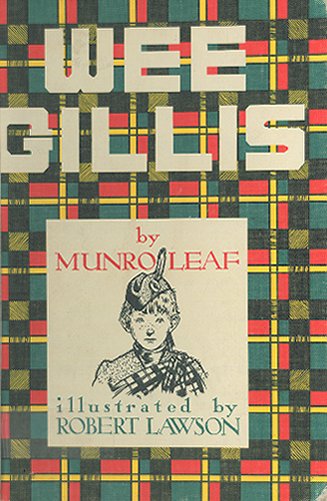
So, with five or six thousand new children's books published each year, why recommend one that is 80 years old? Several reasons. Who cares how old a story is if it's a good one? This one, by the author of the award winning The Story of Ferdinand, is a good one. Robert Lawson's black and white drawings carry the story well.
But what I most like about Wee Gillis is the Christian worldview lesson to be learned--the Almighty wastes nothing; He will use adversity in our lives to get us ready "to do good works, prepared in advance for us to do." Did Munro Leaf have this in mind as he wrote the story? I'm sure he didn't, but that is just the point. Common grace says that all people experience some of the grace of God, regardless of their religious convictions, simply by being created in His image and living in a world that He made and ordered. If we have eyes to see and ears to hear, we will see truth everywhere. Even if the artist doesn't.
Quality = 5; Acceptability = 5.

Thursday, April 10, 2008

How many ways can you say "compromised"?


So there I was, plowing through the kid's books at Goodwill, hoping for some 99 cent treasures. Bingo. Four volumes of Beatrice Potter's Peter Rabbit stories, in like new condition. Sold. But wait, here's another, an "adaptation". What, we're going to shorten these stories, edit them, put several original pages on one page? Please! Avoid books that use these terms: adapted by; abridged; based on; re-told. (There is one class of exceptions. Since folk tales and legends were, by nature, spoken rather than written, they can frequently be re-told in contemporary grammar without compromising the story.) For the rest, for the classics, avoid adaptations. If necessary, wait to read them until your children are ready for the real thing. You, and they, won't be disappointed.
Question: Are there exceptions to my rule? (Abridgments or adaptations that are actually preferable to the originals)

Tuesday, April 8, 2008

Don't miss Magers and Quinn


It's great to be home after two weeks of traveling (my excuse for not posting recently). My first ever visit to Washington D. C. and New York City with our school's 7th and 8th graders was amazing and blessed in every way. I'll travel with that group anytime!
After a brief 18 hours at home, my wife and I headed back to SeaTac to spend a few days with our younger daughter Kari in Minneapolis. It is still winter in Minnesota, but we thoroughly enjoyed walking each day. (Kari is trying to complete all 60 Walks Within 60 Miles of the Twin Cities--only twelve to go, before she moves back to Washington this summer!)
Which leads me back to the subject of books; in particular, kid's books. If you go to Minneapolis, don't miss Magers and Quinn-a terrific new and used bookstore on Hennepin St. That's where I picked up a couple of treasures: a fairly clean copy of G. K. Chesterton's Coloured Lands, Rock Crystal by Adalbert Stifter (more on that one another day), and an excellent collection of essays on kid-lit-crit: Only Connect. I'm hoping that the essay book will lead to a presentation on the history of children's books at our Christian teachers convention next Fall.

Monday, April 7, 2008

From "The Dragon's Grandmother"


The soul is sane "but the universe is wild and full of marvels. Realism means that the world is dull and full of routine, but that the soul is sick and screaming.... In the fairy tales the cosmos goes mad; but the hero does not go mad. In the modern novels the hero is mad before the book begins, and suffers from the harsh steadiness and cruel sanity of the cosmos."
G. K. Chesterton essay, quoted in Only Connect, p.155

Saturday, March 22, 2008

Genius, according to R. L. Stevenson


"I am not a man of any unusual talents; I started out with very moderate abilities; my success has been due to my really remarkable industry--to developing what I had in me to the extreme limit. When a man begins to sharpen one faculty, and keeps on sharpening it with tireless perseverance, he can achieve wonders. Everybody knows it; it's a commonplace, and yet how rare it is to find anybody doing it--I mean to the uttermost as I did. What genius I had was for work!"
Quoted in The Green and Burning Tree, by Eleanor Cameron.

Thursday, March 20, 2008

The Van Gogh Cafe: This Week with Cynthia Rylant


"The Van Gogh Cafe brings out the best in people.." But I'm not sure it brought out the best in Cynthia Rylant. Publishers Weekly said, "Readers will share the wonder of ten-year-old Clara and her father Marc, the cafe's owner, as they witness a series of serendipitous occurrences involving stranded seagulls, aged film stars, magic muffins, lost pets, and mysterious travelers." I think it was the gluttonous seagulls and aged film star that lost me toward the end.
School Library Journal enthused- "A lovely title that's perfectly suited to all readers who can recognize the special magic of the world around them." Of course it is lovely; Rylant will not, perhaps cannot, produce anything else. It's the special magic that I'm unsure of. What do you think of this kind of "magic"? Is it similar or different from the kind of magic in, say, Narnia?
Reading level = 4.5; not recommended.

Wednesday, March 19, 2008

Missing May: This Week with Cynthia Rylant


Deservedly the winner of the 1993 Newbery Award (and many others), this is the story of a death in an unusual family, a family that God brought together out of the mutual need of its members. The book is PG on our shelves, due to mild profanity and a (futile) attempt to contact the dead. I use it, with some editing, as a middle school read-aloud. Another sensitively written story from a great writer. Reading level = 6.7; Quality = 5; Acceptability = 3.

Tuesday, March 18, 2008

The Relatives Came: This Week with Cynthia Rylant


So who could craft an award-winning picture book out of a visit by a station wagon full of relatives from Virginia? Cynthia Rylant and illustrator Stephen Gammell could. And did. This affectionate, exuberant memoir gets a 4 for quality and a 5 for acceptability.

Monday, March 17, 2008

The Blue Hill Meadows: This Week with Cynthia Rylant


Cynthia Rylant is one elegant writer--she handles words with clarity, ease, and great sensitivity; and she does it across a surprising range of reading levels. This book includes four stories of the Meadow family, drawn from the author's childhood in the Appalachian Mountains. Ellen Beier's interspersed watercolors set just the right tone. A good read-aloud for younger children.
Reading level = 4.5; Quality = 5; Acceptability = 5.

Thursday, March 13, 2008

Thunder Cake


So what do you do with a Ph.D. in art history? Write and illustrate children's picture books, of course! At least, that's what Patricia Polacco has done. Thankfully. For us. Frequently drawing on her Russian heritage and Michigan childhood, Polacco's "stories are perfectly complemented by her distinctive style of art." (Silvey, 361) Thunder Cake is classic Polacco, with Talking Points on "courage", and should, I think, have won the Caldecott Medal in 1991. Quality = 5; Acceptability = 5.